Showing posts with label Ancient Macedonians. Show all posts

Thursday, February 10, 2011

The importance of historical truth and the Macedonian issue

A note of introduction:
This is not a general news website about Macedonia. Other sites, chief among them the
http://history-of-macedonia.com/wordpress/ , http://www.echedoros-a.gr/ and 
http://akritas-history-of-makedonia.blogspot.com/ , among others are filling that role splendidly. Here, I only try to collect my articles on the Macedonian issue and do so in a more colorful way, with more explanatory photographs and notes than when they appear in other mediums.
There are moments though, when an article appears where you have a humbling moment of :  "I could have never said it as eloquently!" and that is when I need to make sure it receives the widest publication exposure possible.

This is one of those articles: Scientifically precise and surgically brutal to the point!
Enjoy it!

By John Melville-Jones,
Professor in Classics and Ancient History at the Graduate Research School of the University of Western Australia.

Last October I gave a talk in Melbourne in which I stated that the proposed erection of a large and expensive statue of Alexander the Great in Skopje was not only an inappropriate expenditure for a country that did not claim to be rich, but was also at attempt to justify an invented historical relationship.

Since that time I have received a number of messages, some of them thoughtful, others merely abusive. The thing that they have in common is that they do not address the question that I raised. Let us look at the facts.
The earliest history of the ancient Macedonians is not clearly understood, but the tribe called the Makedónes seem to have established themselves in an area which is sometimes called Pieria, around Aigai and Edessa, by the eighth century B.C. They pushed out or absorbed other groups who had settled around them. Over the next two centuries they expanded their territory, and although they still had a number of separate tribes, a firm succession of kings was established, and this made them stronger than other more divided groups. Some of the names of early kings that we have may be legendary, but with Perdikkas I (7th century) we seem to be on firmer ground. The territory under the control of the Makedónes continued to expand, and by the beginning of the 5th century one of their kings, Alexander I, had begun to issue coins with his own name written on them in Greek.

Several passages that survive in Greek authors of the fifth and fourth centuries suggest that the Macedonians were regarded by the southern Greeks as ‘different’. This is not surprising, since they had arrived on the scene later than the groups that had entered the peninsula during the Bronze Age and moved southward, but it is clear that they were, although perhaps grudgingly, accepted as being Hellenes. The situation is less clear with regard to their neighbours on the north, in an area that cannot be exactly defined, but is approximately equivalent to the territory of the Former Yugoslav Republic of Macedonia. These were called the Paionians, and there were conflicts as they tried to expand into Macedonian territory. At the accession of Philip II to the throne of Macedonia the Paionians joined the Illyrians in an attempt to take advantage of the inexperience of the new king, but Philip drove them back, defeating them on more than one occasion.

The Paionians were defeated, but their territory did not become a part of Macedonia. This is shown by the fact that the Paionian kings began issuing coins bearing their own names (written in Greek of course) during the reign of Philip II, and when Alexander started making his conquests, they provided a separate contingent of cavalry in his army. They remained separate from Macedonia until the Roman conquest, as their issuing of coinage, first in the name of their kings, and finally in the name of the Paionians themselves in the early second century B.C., shows. Then, for administrative purposes, a large Roman province called ‘Macedonia’ was created, which included them, and large areas of land to the south and west, far beyond the borders of the original Macedonia.

So the area now controlled by Skopje was not in the fourth century B.C. or for many centuries after that a part of Macedonia (except perhaps for a very narrow strip along its southern border), and the erection of a statue of Alexander the Great in Skopje cannot be justified, because it is based on a distortion of history by a people who, I am sorry to say, are having a false identity created for them.

Monday, January 24, 2011

On the "New bio gives a human look to a classic conqueror" article

A reply to Matthew Price's book review article


 on THE BOSTON GLOBE:

"New bio gives a human look to a classic conqueror"


http://www.boston.com/ae/books/articles/2011/01/18/alexander_the_great_bio_gives_a_human_look_to_a_classic_conqueror/?comments=all


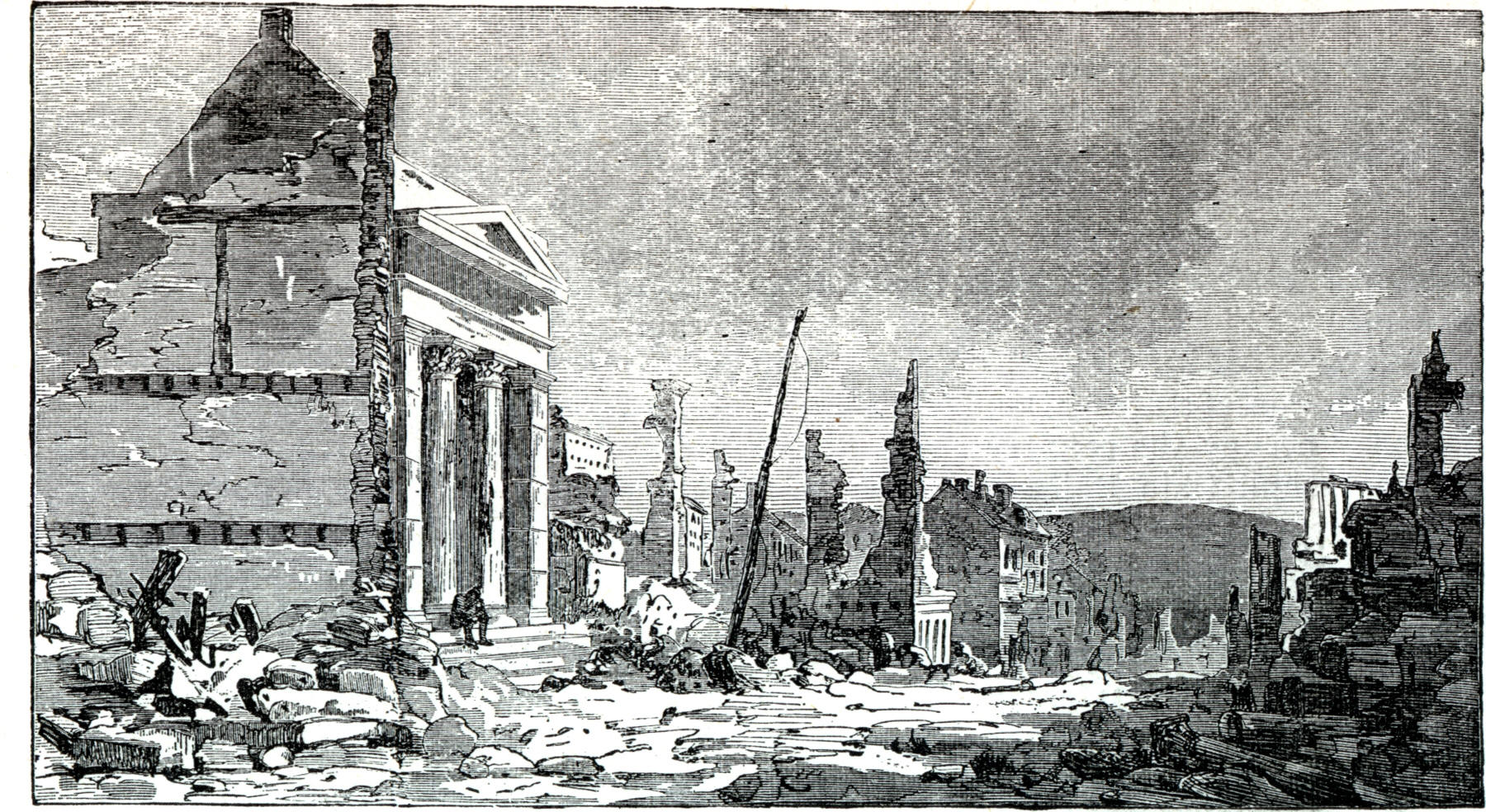
Richmond, Va, burned by Lincoln's Yankees, not Thebes, Greece burned by Alexander's Macedonians
eismakedon wrote:
"Lincoln’s enemies paid dearly for their resistance: When the South revolted against his rule in 1861, Lincoln sacked and destroyed several Confederate cities, Atlanta being one of them" but "It should be remembered that Lincoln, technically, was not American, but Yankee. Indeed, the Confederates looked down on the North, however much they were powerless to stop Yankee dominance."*

Now that we put things in perspective, let me add a couple points, most of which have been said time and again, yet some people who had a D- in their high school History and never repeated the course in college seem to pass by:

The Macedonians proclaimed their Hellenism in every opportunity. Herodotus tells us that none other that Alexander I, 150 years before Alexander the Great tells the world that he is a Temenides Greek from Argos from old. Herodotus also tells us that the Macedonians were accepted as participants in the exclusively Pan-Hellenic Olympic. We know that Philip participated won several times in the Olympic and Delphic games and the Macedonian king won a seat in the Delphic council. Olympic and Delphic games were NOT Greco-barbarian affairs. We have the names of tens of Macedonians that competed and won fame in the Olympic, Nemean, Delphic and other exclusively Hellenic Games. You will not find the names of any Illyrians, Persians or Thracians competing there. This in itself is argument enough to close the case of how the Macedonians were viewed by other Greeks.

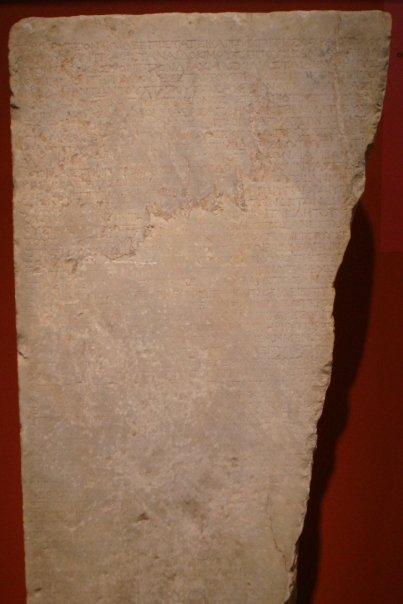
The recruitment inscription of Cassandreia
Another issue to consider. The language of the army was Greek. How do we know it? We have Arrian tell us that when Alexander recruited the first 10,000 Persian youth, he had them crush trained in the Greek language and in the Macedonian arms. This was in Persia, after all, not in Greece. If the Macedonians spoke a different language, how would they understand the commands so well as to crush every army they encountered? Would the American army make its commands in Spanish, just to accommodate its Spanish speaking recruits? It is true that Attic Greek, the dialect spoken in Athens was not the colloquial Macedonian dialect, and we know this from, among others, the dialect on "Pella Katadesmos". Some say that the Russians also spoke French in the Czarist high society circles, which is not related to Russian. Very true, but the Czars' army did not speak French, the commands were given in Russian. When the Russians pushed into Siberia, and reached what is now Vladivostok, we find people now who speak Russian there, not French. The language of the army is the language the common people can understand, even when it is gets more technical and sterile, it is still understood by a high school drop out recruit who speaks his own dialect, urban, prairie or mountain, at home. We also have Epigraphical confirmation in the Cassandreia and other stelae where recruits are being asked to show up and bring what is necessary to join the army. This are in Macedonia, for the Macedonian farmer boys to read and join up.
Once the Macedonians conquered the known world, it was the Greek language that they spread around the world. It was due to Alexander's Macedonians that the Greek language became the Lingua Franca of the ancient world, from North Africa to India, not because of Athens or Sparta. It is due to his conquests that the Christian Bible was written in Greek, and this is because everyone, Jews, Persians, Egyptians and many others, had to use Greek to communicate in the vast Hellenistic kingdoms. The language we now find inscribed in the Macedonian outpost cities in Batria / Afghanistan is Greek, and the culture of those cities that outlasted every single Hellenistic kingdom after Alexander, including Cleopatra in Ptolemaic Egypt, is unmistakably Greek. We know that it is the trait of every empire to promote the use of its own language, the Americans and the British spread English, the Soviets Russian, the French in Africa and Canada French, the Spaniards and Portuguese Spanish and Portuguese (not Latin, for example), the Arabs spread Arabic along with Islam and the Romans who were fascinated with Greek culture and spoke Greek in educated circles, spread Latin. The Macedonians, who dominated half of the known world for some 300 years spread their language too, which was Greek. They did not spread their own colloquial dialect, nor the Attic Greek either, but a new dialect of Greek which arose because of them, a common Greek dialect, a creative amalgam of Attic, Macedonian and other Greek dialects, Common Greek - Coene or Koine Greek was formed, the dialect in which the Christian Bible is written.

If you wonder why Greeks are so sensitive about this issue, maybe you could read up on the issue of the Slavomacedonians of ex-Yugoslavia (Skopje-FYROM), who attempt to claim the name and the historic legacy of Alexander's Macedonians. They also call their language "Macedonian" creating confusion to the Historically challenged, though it is a Serbo-Bulgarian dialect which appeared along with their Slavic progenitors into the Balkans in the 7th c AD, fully a thousand years AFTER Alexander's Greek Macedonians.

Future unification of Baja & Alta California for the "Californians" who speak "Californian"?!
An average American might think this is much ado about nothing, until some split off former "Estado" from Mexico appears in the scene at some point in the unforeseeable future, that that will call itself FMRC, as in the Former Mexican Republic of California, who will claim to speak "Californian" and demand annexation of  "Upper California" into the "Motherland" state of "Baja California" and create a "United California"!
Balkan ultra-nationalist irredentism, is the main cause of war in the Balkans. Slavomacedonian irredentism is hiding behind such un-historical statements about a non-Greek (indeed Slavic speaking!) Alexander, as well as Philip and even Aristotle, to support their land-grabbing claims against Greek Makedonia, for a "United Macedonia" or Obetineta Makedonija, in the Slavonic dialect (a mix of mainly Serbian glossary and Bulgarian syntax and grammar) that Alexander's Macedonians, the Greek-speaking MAKEDONES would have never understood.


 * "Alexander’s enemies paid dearly for their resistance: When Thebes revolted against his rule in 335 BC, Alexander sacked and destroyed the city." and also:
"It should be remembered that Alexander, technically, was not Greek, but Macedonian. Indeed, the Greeks looked down on Macedonia, however much they were powerless to stop the kingdom’s expansion"


Thursday, June 3, 2010

A MACEDONIAN IN HELLENISTIC EGYPT : παρὰ τὸ Ἕλληνά με εἶναι

"PETITION ABOUT AN ASSAULT": a document about an ethnic assault incident that happened in Memphis, in Hellenictic Egypt, in 163 BC. Πτολεμαίος Γλαυκίου, Μακεδών / Ptolemaios son of Glaukias, Macedonian, has been assaulted for as he himself declared: παρὰ τὸ Ἕλληνά με εἶναι / because I am Greek!
I admire History: it has such strong and faithful allies in Archaeology, Epigraphology and Linguistics, among so many other scholarly disciplines, that somehow, it always finds a way to get its revenge and expose its falsifiers! Despite the rivers of Yugoslavian ink that have been wasted in the attempt to portray the Skopje Yugoslavs as true "Macedonians", a Hellenistic legal document, a papyrus (UPZ18) written 2173 years ago, comes out to shine its light on the historical truth, flushing the outlandish pseudo-historical claims of Skopjean pseudo-scientists such as the sorry likes of Professors Tendov and Boshevski or Aleksandar Donski down the Nile and into the sewers of Alexandria.
Scripta Manent, the Latins said, "the written word remains", and it speaks loud and clear about the Greek ethnicity of the Ancient Macedonians: τὸ Ἕλληνά με εἶναι / I am Greek, tells us Πτολεμαίος Γλαυκίου, Μακεδών / Ptolemaios son of Glaucias, the Macedonian, through the ages.

We read in the:
"Greek Historical Documents: The Hellenistic Period",
by Roger S. Bagnall and Peter Derow, Published in 1981 by SCHOLARS PRESS for The Society of Biblical Literature:

UPZ18
"In the second century, with the increasing tide of Egyptian nationalism and resentment of the superior position of the Greeks, it was sometimes dangerous to be a Greek among Egyptians. An episode of Ptolemaios' stay in the Serapaeum of Memphis illustrates this problem.

To Dionysios one of my friends and strategos, from Ptolemaios son of Glaukias, Macedonian (Πτολεμαίου τοῦ Γλαυκίου Μακεδόνος), one of those in katoche in the great Serapeum in Memphis in my 12th year. Being outrageously wronged and often put in danger of my life by the below-listed cleaners from the sanctuary, I am seeking refuge with you thinking that I shall thus particularly receive justice. For in the 21st year, on Phaophi 8, they came into the Astarteion in the sanctuary, in which I have been in katoche for the aforesaid years, some of them holding stones in theur hands, others sticks, and tried to force their way in, so that with this opportunity they might plunder the temple and kill me because I am Greek (παρὰ τὸ Ἕλληνά με εἶναι), attacking me in concerted fashion. And when I made it to the door of the temple before them and shut it with a great crash, and then ordered them to go away quietly, they did not depart; but they struck Diphilos, one of the servants compelled to remain by Sarapis, who showed his indignation at the way they were behaving in the sanctuary, robbing him outrageously and attacking him violently and beating him, so that their illegal violence was made obvious to everybody. When the same men did the same things to me in Phaophi of the 19th year, I petitioned you at that time, but because I had no one to wait on you it happened that when went went unwarned they conceived an even greater scorn for me. I ask you, therefore, if it seems good to you, to order them brought before you, so that they may get thei proper punishment for all these things. Farewell.
Mys the clothing seller, Psosnaus the yoke-bearer, Imouthes the baker, Harembasnis the grain-seller, Stoteotis the porter, Harchebis the doucher, Po…os the carpet weaver, and others with him, whose names I do not know."

Note (M.E.B.):
The names: Dionysios, Ptolemaios and Glaukias are all Greek names.
The names: Mys, Psosnaus, Imouthes, Harembasnis, Stoteotis and Harchebis are all Egyptian names


The Original Greek Text:
http://www.perseus.tufts.edu/hopper/text?doc=Perseus%3Atext%3A1999.05.0245%3Adocument%3D7

Date: 163BC
Location: Memphis
PParis36;pg648
ρ

Διονυσίωι τῶν φίλων καὶ
στρατηγῶι
παρὰ Πτολεμαίου τοῦ Γλαυκίου
Μακεδόνος
τῶν ὄντων ἐν κατοχῆι
5 ἐν τῶι μεγάλωι Σαραπιείωι ἔτος
ἤδη δέκατον. ἀδικοῦμαι
ὑπὸ τῶν ἐν τῶι αὐτῶι ἱερῶι
καλλυντῶν καὶ ἀρτοκόπων
τῶν νυνὶ ἐφημερευόντων,
10 καταβαινόντων δὲ καὶ εἰς τὸ
Ἀνουβιεῖον, Ἁρχήβιος ἰατροῦ
καὶ Μυὸς ἱματιοπώλου καὶ
τῶν ἄλλων, ὧν τὰ ὀνόματα
ἀγνοῶ. τοῦ γὰρ 19 (ἔτους_ρπαρ; Φαῶφι 11
15 παραγενόμενοι ἐπὶ τὸ
Ἀσταρτιεῖον1, ἐν ὧι κατέχομαι
ἱερῶι, εἰσεβιάζοντο βουλό-
μενοι ἐκσπάσαι2 με καὶ ἀλο-
γῆσαι, καθάπερ καὶ ἐν τοῖς πρό-
20 τερον χρόνοις ἐπεχείρησαν
οὔσης ἀποστάσεως, παρὰ τὸ
Ἕλληνά με εἶναι
. ἐπεὶ ο[ὖ]ν
ἐγὼ μὲν συνιδὼν αὐτοὺς
ἀπονενοημένους ἐμαυτὸν
25 συνέκλεισα, Ἁρμᾶιν δὲ
τὸν παρ᾽ ἐμοῦ εὑρόντες
ἐπὶ τοῦ δρόμου καταβαλόντες
ἔτυπτον τοῖς χαλκοῖς
ξυστῆρσιν. ἀξιῶ οὖν σε συν-
30 τάξαι γράψαι Μενεδήμωι
τῶι παρὰ σοῦ ἐν τῶι Ἀνουβιείωι
ἐπαναγκάσαι αὐτοὺς τὰ δίκαιά μοι
ποιῆσαι, ἐὰν δὲ μὴ ὑπομένωσιν,
ἐξαποστεῖλαι αὐτοὺς ἐπὶ σέ,
35 ὅπως διαλάβῃς3 περὶ αὐτῶν μισο-
πονήρως.
εὐτύχει.
Μενεδήμωι. προνοήθητι ὡς τεύξεται
τῶν δικαίων.
40 (ἔτους_ρπαρ; 19 Φαῶφι 19.


By: Miltiades Bolaris, assisted by Phoebos Apollon Bolaris

Το παρόν άρθρο έχει επίσης καταχωρηθεί καί στο περιοδικό AMERICAN CHRONICLE ώς:
"A MACEDONIAN IN HELLENISTIC EGYPT : MACEDON...Because I am Greek!", June 05, 2010.

http://www.americanchronicle.com/articles/view/160732

Saturday, May 15, 2010

Professor Dr. Frank L. Holt's thunderous text on Macedonia

MΑΚΕΔΟΝΙΑΝ ΚΑΙ ΤΗΝ ΑΛΛΗΝ ΕΛΛΑΔΑΝ
MACEDONIA AND THE REST OF GREECE


The following text, written by Dr. Frank Holt Professor of Ancient History at the University of Houston, will be the prologue of a book published by the Macedonian Studies Center. The book will include the letter by world known archeologists, historians and researchers from various academic institutions in the world to President Barack Obama regarding the Greekness of Macedonia. http://macedonia-evidence.org/

PROLOGUE

Μακεδονίαν καί τήν άλλην Ελλάδαν*
Arrian

The documents comprising this book speak forcefully for the proposition that the history of ancient Macedonia, including the brilliant reigns of Philip and his son Alexander, belongs squarely in the cultural, economic, political, religious, and military history of Hellenism. The cultural milieu of the Macedonian court was Greek. The texts that Alexander studied as a youth were Greek. The books he read while in Asia were Greek. The heroes he emulated, the gods he worshiped, the temples he built were Greek. The coins he minted in the millions were Greek. The legacy he left behind from Anatolia to India was as Greek as his settlers could make it, right down to a theater, gymnasium, and inscribed copy of the Delphic maxims in a far corner of Afghanistan. To say that Alexander’s kingdom was in some ways out of step with the city-states to the south is hardly an argument against his Hellenic heritage; it only means that Macedonia remained more Homeric than Athens, Thebes, or Sparta. It is hard to be more Greek than that. Nor should we be troubled by Alexander’s ability to speak a Macedonian dialect or by his interest in the world beyond Greece itself. Alexander was a man of the world, certainly, but he was a man from Macedonian Greece. According to Arrian 2.14.4, Alexander said this himself in a letter to the Persian king Darius:

Alexander sent a reply to Darius by way of Thersippos, who went back with the Persian envoys. Alexander’s letter states as follows: “Your ancestors invaded Macedonia and the rest of Greece, inflicting evils upon us without provocation…”

Here Alexander’s point seems clear—Macedonia was historically a part of Greece.

A widening academic consensus on this matter may be witnessed among the many
signatories to another epistle of more recent composition, addressed to President Barack Obama. That letter, too, cites history in order to show the connection between Macedonia and the rest of Greece. This unusual appeal to an American leader arises from a decision by the United States to recognize as the ‘Republic of Macedonia’, with all of its historic implications, what had previously been called the Former Yugoslav Republic of Macedonia, or Skopje. But why should a decision of this kind stir a strong reaction, particularly among ‘ivory-tower’ academics? Is not the new name just an economy of words? Does not every nation have the sovereign right to adopt any name it chooses? Not really, for in many cases claims follow names: historic, ethnic, and even territorial.

The crux lies less in the politics of 2004, when a former administration took this action, than in the pages of a work whose title bears a date twenty years earlier. In George Orwell’s 1984, penned in 1948 by an author
aware of why words and ideas matter, the motto of Big Brother and his insidious Ministry of Information highlights the dangers of historical distortion: Who controls the past controls the future; who controls the present controls the past. Real power resides not in the technologies of war or totalitarianism, but rather in that ancient invention of the Greeks called history. The past matters, and more than most people in Orwell’s world—or ours—may realize. The future surely fascinates us, but it has no force. It merely waits while the past drives the present. On the train-tracks of time, the engine has always been in the back, pushing rather than pulling. Thus, the past cannot be unhooked and unheeded as so much dead weight. Nor can it be left in the hands of the wrong engineers: Whoever controls the past determines the future, and that ultimately depends upon who in the present is shaping the past. Parliaments? Pundits? Preachers? Poets? Presidents? Who controls the present must choose carefully whom to trust with our past, else a false and monstrous future may result. At the very least, Mr. Presidents and Madam Secretaries and Peoples of the World, please consider carefully the contents of this book and the credentials of those who have contributed to it.

Frank L. Holt

* "Macedonia and the rest of Greece"

Frank L. Holt (fholt@uh.edu) is a professor of history at the University of Houston and most recently author of:
"Into the Land of Bones: Alexander the Great in Afghanistan" (2005) and
"Alexander the Great and the Mystery of the Elephant Medallions" (2003),
both published by the University of California Press.